Harrisville NH Mill Village Homes and Historic Living
July 23, 2026
July 23, 2026
If you are drawn to places with real history, Harrisville offers something rare. Instead of a village that only hints at its past, you will find a remarkably intact mill community where ponds, brick buildings, working village spaces, and daily life still fit together. If you are thinking about buying here, it helps to understand what historic mill village living actually means and what you can expect from the setting, the homes, and the ownership experience. Let’s dive in.
Harrisville is not just an old New England village with a few historic buildings scattered around town. Its historic core is a National Historic Landmark District, designated in 1977, and the district covers about 200 acres.
Within that area, you see a full village landscape that includes Harrisville Pond, the mills, boarding houses, workers’ housing, churches, an 1857 schoolhouse, a general store, and many residences. According to the National Park Service nomination, most structures are little altered, and the district is largely free of modern intrusions.
That level of continuity shapes how the village feels when you are there. Harrisville reads as a lived-in historic place, not a reconstruction or a themed destination.
In Harrisville, historic mill village living means your surroundings were shaped by water-powered industry, village commerce, and civic life over many generations. The textile economy dates back to the late 18th century, and the mills played a central role in how the community developed.
Historic Harrisville notes that many of the village buildings were constructed during a major period of growth from roughly 1820 to 1870. During that era, mills, storehouses, boarding houses, tenements, and homes were built in direct relationship to the water system and the land.
That means the village does not follow the feel of a modern subdivision or a simple street grid. Instead, homes and buildings are grouped around the mill pond, canal, and steep gorge that powered the mills.
One of the most important things to understand about Harrisville is that water is not just part of the scenery. It is part of the village layout, the architecture, and the day-to-day atmosphere.
Historic Harrisville reports that Goose Brook drops 100 feet in a quarter mile, which made waterpower possible and helped drive the village’s industrial development. The same source documents 15 dams in town, 11 of them intact, along with reservoirs that were essential for maintaining power during dry seasons.
Today, that history remains visible all around you. Pond edges, canals, terraces, steep slopes, and stone retaining walls are part of the everyday setting, especially in the historic core.
For a buyer, this creates a sense of place that is hard to duplicate elsewhere in the Monadnock region. It also means the landscape can feel more layered and site-specific than what you may find in a conventional village neighborhood.
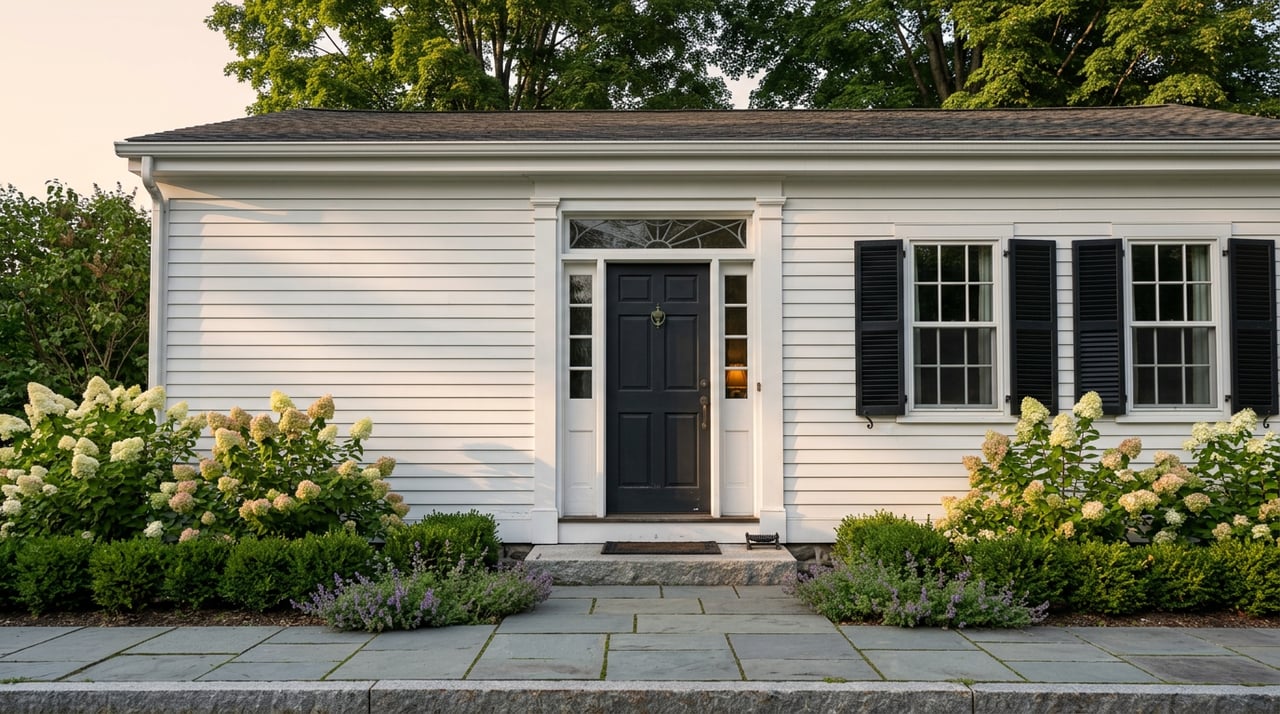
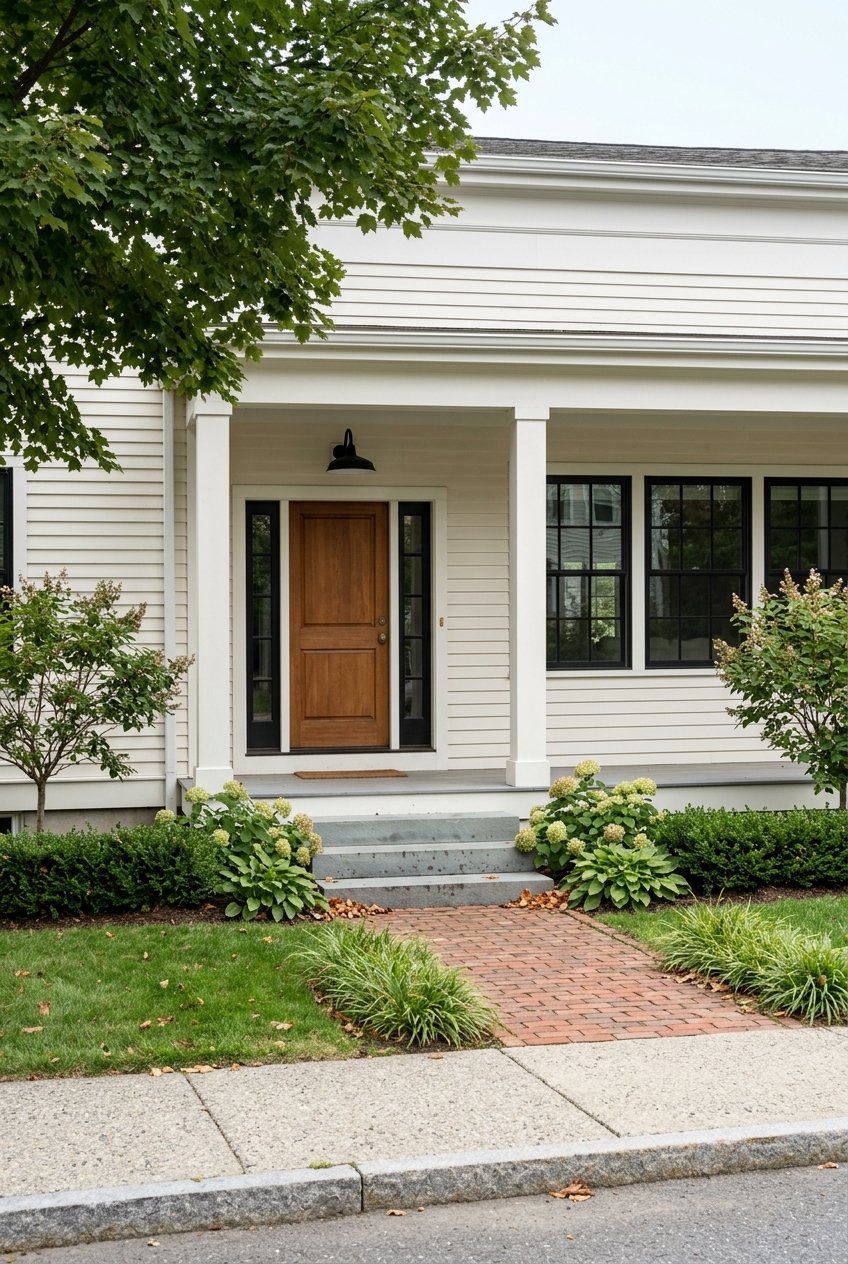
Harrisville does not offer one standard housing type. The local housing stock is best thought of as a mix of village homes, historic multi-unit buildings, and rural properties beyond the core.
Some of the most recognizable homes in Harrisville are red-brick residences with white-painted wood trim. Historic Harrisville identifies the Bethuel Harris House as the first red-brick village house and highlights Federal and Greek Revival forms that help define the village character.
If you are drawn to architecture with visual presence and historic detail, these homes may be especially appealing. They are part of the reason Harrisville has such a strong and consistent identity.
Not every home in the village is large or formal. Harrisville also includes smaller village houses and capes, including the 1½-story Charles C. P. Harris House.
For buyers, that means the village can offer a range of scales and living styles. You may find properties that feel compact and manageable while still being closely tied to the historic fabric of the community.
Historic Harrisville also documents boarding houses and other multi-unit structures, including the Harris Boarding House and the Cheshire Mills Boarding House. The latter housed mill workers for more than 100 years.
These buildings reflect the village’s industrial past in a direct way. They can appeal to buyers who value historic character and who understand that some properties here may have a very different layout and history than a typical single-family home.
The village also includes mill-support structures such as the Harris Storehouse and the Sorting & Picker House. These remind you that Harrisville grew as a working mill village, with buildings designed for production, storage, and support functions as well as residential life.
While not every buyer is looking for this type of property, their presence shapes the overall setting. They add depth and authenticity to the village streetscape.
Outside the main historic village, the broader Harrisville area includes rural and summer-residence properties. The state register includes both the Harrisville Rural District and the Beech Hill Summer Home District.
That gives buyers another option if you love Harrisville’s character but want a more country setting. Depending on your goals, you may be comparing a village residence with a more secluded property nearby.
Buying in Harrisville often means buying into a place with a strong preservation identity. The National Park Service nomination points to both the village’s relative isolation and a preservation-minded citizenry as reasons the district has remained so intact.
In practical terms, you should expect a setting where historic character matters. Materials, site conditions, and the visual relationship between buildings and landscape are part of what makes ownership here distinctive.
That does not mean the village is frozen in time. Historic Harrisville makes clear that the core remains a lived-in district rather than a museum piece, and that difference matters.
A common concern with highly historic places is whether they feel active and functional or overly formal. Harrisville stands out because daily life still has real anchors in the village.
The Harrisville General Store has operated since 1838 and has been owned by Historic Harrisville since 2008. It sells groceries, local food, and gifts, and it also hosts dinners and events that help make it a year-round gathering place.
That kind of local institution changes the feel of a historic district. Instead of history sitting quietly in the background, it becomes part of ordinary life.
Harrisville Designs adds another layer to that experience. The company says its workshops take place in the Bethuel Harris Mill, built in the 1830s, and its operations emphasize woolen-textile production, spinning mill tours, and village history.
For buyers, this helps explain why Harrisville feels active, creative, and grounded in its historic identity. The village’s industrial past is still visible, but it also continues to inform the present.
If you are considering a purchase in Harrisville, it helps to approach the market with both appreciation and practicality. Historic homes and village properties often reward buyers who pay close attention to setting, structure, and long-term fit.
A few considerations may be especially relevant here:
Because the housing stock is so varied, careful property-by-property analysis matters. In a market like this, the right match is about more than square footage alone.
Harrisville is one of those places where broad market assumptions can miss the point. A home’s value and appeal may depend on its location in or near the historic core, its architectural style, its relationship to water and terrain, and how it fits into the larger village setting.
That is where experienced local guidance becomes especially useful. When you are evaluating a property in a place with this much historic texture, you want context as much as you want data.
Whether you are looking for a village residence, a country property nearby, or a home with long-term lifestyle and investment appeal, a thoughtful buying strategy can help you move with confidence.
If you are exploring Harrisville or the wider Monadnock region, Andrew Peterson offers seasoned local guidance, careful market analysis, and a highly personalized approach to finding the right fit.
Stay up to date on the latest real estate trends.
With over four decades of experience and more than $500 million in career sales, Andrew Peterson delivers trusted guidance, local knowledge, and exceptional results across New Hampshire. Whether buying, selling, or investing, partner with a seasoned real estate professional dedicated to delivering personalized service and exceptional results.